
Call us now :08045478105
 Send Inquiry
 Send Inquiry
Melt Flow Index Apparatus
Price 58000 INR/ Unit
MOQ : 1 Unit
Melt Flow Index Apparatus Specification
- Number of Specimens
- 1 sample per test
- Max Height
- 550 mm
- Accuracy
- 0.1C (temperature), 0.01 g/10 min (melt flow rate)
- Resolution
- 0.01 g
- Port Size
- Standard as per ASTM D1238
- Response Time
- Within 1 min, fast thermal stability
- Specimen Size
- 2.095 mm 0.005 mm (Die diameter as per standard)
- Operating Voltage
- 230 V AC
- Features
- Corrosion resistant, dead weight loading, microprocessor controller, auto and manual cutting
- Display Type
- Digital LED/LCD Display
- Measuring Range
- 0.01 to 50 g/10 min
- Test Range
- 0.01 to 50 g/10 min
- Humidity
- Up to 80% RH
- Frequency
- 50 Hz
- Power Supply
- 230 V AC, 50 Hz
- Mounting Type
- Tabletop
- Application
- Measuring the melt flow rate of thermoplastic polymers
- Interface Type
- User keypad and digital display
- Temperature
- Ambient to 400C (0.1C)
- Usage
- MFI testing in polymer quality control
- Capacity
- 600g (Deadweight loading system)
- Machine Weight
- Approx. 25 kg
- Control Mode
- Manual/Automatic (Microprocessor based digital controller)
Melt Flow Index Apparatus Trade Information
- Minimum Order Quantity
- 1 Unit
- Payment Terms
- Cash in Advance (CID), Cheque, Cash Advance (CA)
- Supply Ability
- 100 Units Per Month
- Delivery Time
- 15 Days
- Main Export Market(s)
- Australia, Asia
- Main Domestic Market
- All India
- Certifications
- ISO Certified
About Melt Flow Index Apparatus
Melt Flow Index ApparatusMelt Flow Index Of Thermoplastic Materials Is Defined As The Rate Of Flow In Grams Per Ten Minutes Of Extrudate Of Molten Resins From A Cylindrical Cavity Inside A Heated Metallic Tube Barrel Through A Jet Of A Specified Length And Diameter Under Prescribed Conditions Of Temperature, Load, And Piston Position.
The Globe Melt Flow Index Apparatus For Thermoplastic Materials Consists Of A Heated Extruder Tube, A Removable Jet Through Which The Material Under Test Is Extruded, And A Piston And Dead Weights To Apply The Specified Pressure On The Material Inside The Extruder Tube.
Technical specification
Diameter of Extruder Cavity | 9.55 mm |
Brand | Globe Enterprises |
Voltage | 220 V |
Frequency | 50 Hz |
Material | SS |
Temperature Range | 300 degree C |
Weight | 10 Kg |
Display Type | Digital |
Dimensions of Piston Head | 9.47 mm (Diameter) x 6.35 mm (Long) |
Dimensions of Extrusion Hole | 2.095 mm x 8.00 mm |
Advanced Control and Reliable Results
Equipped with options for manual and microprocessor-based digital control, this MFI apparatus ensures highly accurate and repeatable measurements. The intuitive keypad interface combined with digital LED/LCD display provides a user-friendly experience, allowing seamless switching between operation modes. Its rapid temperature response and stable thermal profile guarantee minimal downtime and high productivity in busy laboratory settings.
Optimal Design for Polymer Testing
Designed to meet ASTM D1238 standards, the apparatus features precise specimen handlingaccommodating sample sizes of 2.095 mm 0.005 mm die diameterand a deadweight loading system with 600g capacity. Its corrosion-resistant build and tabletop mounting make it durable yet compact, ideal for integration into any quality control process. Auto and manual cutting options allow flexibility for different testing protocols, supporting a wide measuring range.
FAQs of Melt Flow Index Apparatus:
Q: How does the Melt Flow Index Apparatus measure the flow rate of thermoplastic polymers?
A: The MFI apparatus calculates the melt flow rate by extruding a heated polymer sample through a die of standard size (2.095 mm 0.005 mm) and weighing the amount extruded over ten minutes, complying with ASTM D1238 guidelines.Q: What is the process for operating the device in manual versus automatic mode?
A: In manual mode, the user controls actions such as sample cutting and timing, while in automatic (microprocessor-based) mode, the apparatus manages cutting, timing, and data calculation through its digital controller, streamlining operations and reducing operator error.Q: When is it recommended to use the Melt Flow Index Apparatus during polymer production?
A: This apparatus is best used during the quality control phase, either on finished products or on intermediate batches, to ensure consistency in flow properties critical for molding, extrusion, or other polymer processing applications.Q: Where can the Melt Flow Index Apparatus be installed for optimal use?
A: The apparatus is designed for tabletop use and can be easily set up in laboratory environments within polymer manufacturing plants, research institutions, or quality assurance facilitiesespecially where precision is paramount.Q: What benefits does the deadweight loading system provide?
A: The deadweight loading system ensures consistent application of force during testing for accurate and repeatable melt flow measurements, eliminating variation caused by manual loading and improving compliance with international testing standards.Q: How does the apparatus handle high humidity and elevated temperatures?
A: With operating capabilities up to 80% relative humidity and stable temperature control from ambient to 400C (0.1C), the MFI apparatus performs reliably in a wide range of laboratory conditions.Q: What is the key advantage of using the digital display and microprocessor controller?
A: The integrated digital LED/LCD display and microprocessor controller provide precise, real-time data output, rapid response time, and user-friendly operation, enhancing test reliability and laboratory efficiency.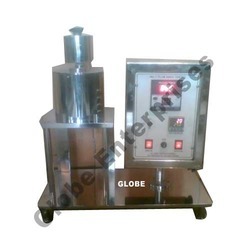
Tell us about your requirement

Price:
Quantity
Select Unit
- 50
- 100
- 200
- 250
- 500
- 1000+
Additional detail
Mobile number
Email

More Products in Plastic Testing Equipments Category
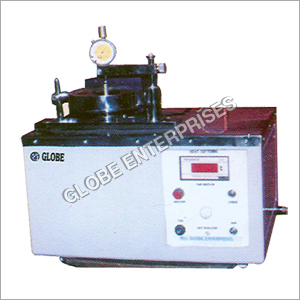
Heat Deflection Tester
Price 80000 INR / Unit
Minimum Order Quantity : 1 Unit
Power Supply : 230 VAC, 50 Hz, Single Phase
Usage : Lab Testing of Plastics
Machine Weight : Approx. 65 kg
Test Stroke : 050 mm
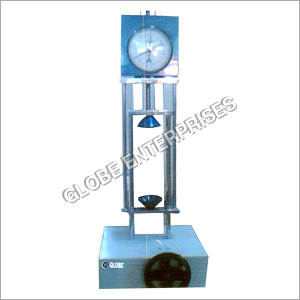
Bottle Compression Tester
Price 40000 INR / Unit
Minimum Order Quantity : 1 Unit
Power Supply : 220V AC, 50 Hz
Usage : Industrial, Laboratory
Machine Weight : 120 kg (Approx.)
Test Stroke : 0300 mm
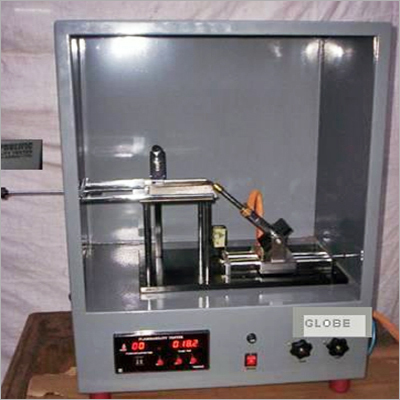
Flammability Tester
Price 55000 INR / Unit
Minimum Order Quantity : 1 Unit
Power Supply : AC 220V, 50Hz
Usage : Material testing laboratory, quality control
Machine Weight : 19 kg
Test Stroke : 300 mm
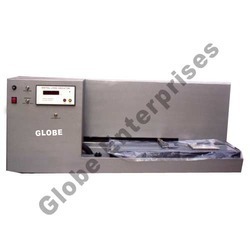
Slip Tester
Price 75000 INR / Unit
Minimum Order Quantity : 1 Unit
Power Supply : 220V AC, 50 Hz
Usage : Laboratory and industrial testing
Machine Weight : 42 kg
Test Stroke : 150 mm

We are mainly looking inquiries from Ghaziabad, Bahadurgarh, Kanpur, Agra and Chennai.
 Send Inquiry
Our Products
- Fabric Testing Equipments
- Foam Testing Equipments
- Footwear Testing Equipments
- Leather Testing Equipments
- Plastic Testing Equipments
- Rubber Testing Equipments
- Helmet Testing Equipement
- Yarn Testing Equipement
- Paper & Paperboard Testing Equipments
- Bursting Strength Tester
- Quadrant Scale
- Industrial Flammability Tester

373/7, Mukund Nagar, Industrial Area, Ghaziabad - 201001, Uttar Pradesh, India

Mr. Ishamuddin
(Proprietor)
Mobile :08045478105
 Send Inquiry
 Send SMS
Developed and Managed by Infocom Network Private Limited.
