
Call us now :08045478105
 Send Inquiry
 Send Inquiry
Abrasion Tester for Sole Leather
Price 70000 INR/ Unit
MOQ : 1 Unit
Abrasion Tester for Sole Leather Specification
- Accuracy
- 0.1 mm
- Frequency
- 50 Hz
- Interface Type
- Manual/Push Button
- Mounting Type
- Benchtop
- Port Size
- 6~8 mm (air inlet)
- Operating Voltage
- 230 V
- Resolution
- 0.01 mm
- Display Type
- Digital LED
- Automation Grade
- Semi Automatic
- Specimen Size
- 70 x 25 mm
- Power Supply
- 230 V AC, 50 Hz
- Test Range
- 099999 cycles
- Features
- Robust body, abrasion drum with high wear resistance, automatic stopping
- Equipment Type
- Abrasion Tester for Sole Leather
- Temperature
- 23C (2C)
- Response Time
- <1 second
- Humidity
- 50% RH (recommended)
- Number of Specimens
- 1 specimen per test
- Max Height
- 400 mm (overall)
- Hardness
- Standard drum (7075 Shore A)
- Application
- Abrasion resistance testing of sole leather
- Gas Pressure
- 4~6 bar (operating air)
- Usage
- Laboratory testing
- Capacity
- Up to 5 test cycles simultaneously
- Machine Weight
- Approx. 40 kg
- Test Speed
- 40 cycles/minute
- Test Stroke
- 32 mm
- Control Mode
- Manual & Digital Timer
Abrasion Tester for Sole Leather Trade Information
- Minimum Order Quantity
- 1 Unit
- Supply Ability
- 100 Units Per Month
- Delivery Time
- 1 Week
- Main Export Market(s)
- Asia
- Main Domestic Market
- All India
About Abrasion Tester for Sole Leather
Abrasion Tester For Sole LeatherThe Resistance To Abrasion Of Sole Leather May Be Determined With The Help Of A Drum Type Abrader (similar To Nbs Abrader).
In This Test, An Abrasive Cloth Strip Of A Specified Grit Is Fixed Over The Circumference Of A Drum, Which Is Rotated At A Specified Speed. The Test Specimen, In Shape Of A Rectangular Strip, Is Held On A Metallic Bar Located Above The Drum Such That Its Longer Axis Is Perpendicular To The Axis Of The Drum. When The Metallic Bar Is Pressed Against The Drum, The Test Specimen Gets Abraded. The Number Of Revolutions Needed To Produce A Depth Of Abrasion Of 2.5 Mm Is Determined And Compared Against That Needed To Produce A Depth Of Abrasion Of 2.5 Mm In A Standard Rubber Compound To Obtain The Abrasive Index Of The Leather Sample Under Test.
Technical specification
Abrasive Cloth Width | 150 mm |
Power Source | Electric |
Brand | Globe Enterprises |
Display Type | Digital |
Material | Stainless Steel |
Voltage | 220 V |
Frequency | 50 Hz |
Test Specimen Load | 200 to 1000 g x 100 g |
Test Specimen Dimension | 90 x 10 mm |
Abrasive Drum Speed | 36 +- 4 RPM |
Optimized for Reliable Laboratory Testing
Built for durability and accuracy, this abrasion tester delivers consistent performance for the quality control of sole leather. Semi-automatic operation, coupled with manual and digital timer controls, allows for flexibility in various testing environments. With a recommended operating environment of 23C and 50% RH, the unit ensures reliable data integrity during each abrasion cycle.
Advanced Features for Enhanced Usability
This tester is equipped with a digital LED display for clear and immediate readings, and operates using a simple push-button interface. The abrasion drum, constructed for high wear resistance, ensures lasting performance. The equipment can run up to five test cycles simultaneously, optimizing laboratory productivity and efficiency.
FAQs of Abrasion Tester for Sole Leather:
Q: How does the Abrasion Tester for Sole Leather operate?
A: The tester uses an abrasion drum, controlled manually or via a digital timer, to apply a controlled number of cycles to a leather specimen. After mounting a 70 x 25 mm specimen, the user sets the desired test parameters and initiates the cycle; the digital LED displays progress, and the machine automatically stops once the chosen cycles are complete.Q: What types of sole leather can be tested with this machine?
A: This equipment is suitable for standard sole leather specimens that measure 70 x 25 mm. The robust abrasion drum meets the required hardness of 7075 Shore A, making it appropriate for most commercial sole leather testing applications.Q: When is it advisable to calibrate or check the machine settings?
A: Regular calibration is recommended, especially before starting a new batch of tests or when the readings appear inconsistent. Checking the settings ensures that the accuracy of 0.1 mm and resolution of 0.01 mm are maintained for precise results.Q: Where should the Abrasion Tester be installed?
A: The tester should be installed on a stable benchtop in a laboratory setting, preferably in an environment maintained at 23C (2C) with a relative humidity of 50%. Proper ventilation and power supply (230 V AC, 50 Hz) are also required.Q: What is the process for conducting an abrasion resistance test?
A: Mount a single specimen onto the testing platform, configure the number of test cycles desired (up to 99,999 cycles), and select the appropriate control mode (manual or digital timer). Start the test using the push-button interface; the machine will automatically stop once the test is complete.Q: How does using this abrasion tester benefit laboratories and manufacturers?
A: Utilizing this tester allows for precise, repeatable assessment of sole leather durability. Its semi-automatic operation saves time, improves accuracy, and supports compliance with quality standards, ultimately ensuring the production of reliable footwear products.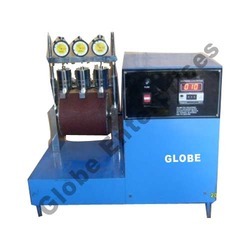
Tell us about your requirement

Price:
Quantity
Select Unit
- 50
- 100
- 200
- 250
- 500
- 1000+
Additional detail
Mobile number
Email

More Products in Leather Testing Equipments Category
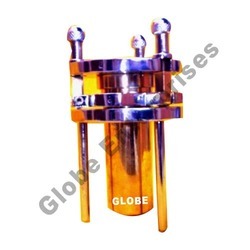
Water Vapor Absorption Tester
Price 15000.0 INR / Piece
Minimum Order Quantity : 1 Piece
Usage : Material testing laboratory equipment
Test Speed : 60 times/min
Response Time : Immediate
Number of Specimens : 2
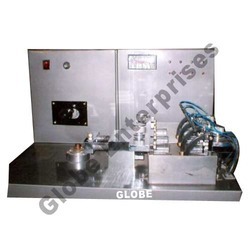
Water Proofness Tester for Leather
Price 95000.0 INR / Unit
Minimum Order Quantity : 1 Unit
Usage : Testing water resistance/leakage of leather
Test Speed : Adjustable, up to 60 cycles/min
Response Time : Instantaneous measurement
Number of Specimens : 1~2

Lastometer Equipment
Price 50000 INR / Piece
Minimum Order Quantity : 1 Piece
Usage : Leather testing laboratories
Test Speed : 100 5 mm/min
Response Time : Immediate
Number of Specimens : Single specimen at a time
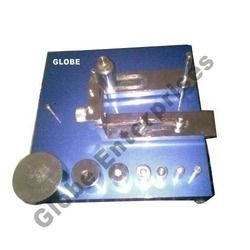
Crackiness Tester
Minimum Order Quantity : 1 Piece
Usage : Laboratory, Quality Control
Test Speed : 60 cycles/min
Response Time : Instantaneous
Number of Specimens : 5

We are mainly looking inquiries from Ghaziabad, Bahadurgarh, Kanpur, Agra and Chennai.
 Send Inquiry
Our Products
- Fabric Testing Equipments
- Foam Testing Equipments
- Footwear Testing Equipments
- Leather Testing Equipments
- Plastic Testing Equipments
- Rubber Testing Equipments
- Helmet Testing Equipement
- Yarn Testing Equipement
- Paper & Paperboard Testing Equipments
- Bursting Strength Tester
- Quadrant Scale
- Industrial Flammability Tester

373/7, Mukund Nagar, Industrial Area, Ghaziabad - 201001, Uttar Pradesh, India

Mr. Ishamuddin
(Proprietor)
Mobile :08045478105
 Send Inquiry
 Send SMS
Developed and Managed by Infocom Network Private Limited.
