
Call us now :08045478105
 Send Inquiry
 Send Inquiry
Water Vapor Absorption Tester
Price 15000.0 INR/ Piece
MOQ : 1 Piece
Water Vapor Absorption Tester Specification
- Response Time
- Immediate
- Application
- Textile, nonwoven, and fabric water vapor absorption testing
- Interface Type
- Standard digital interface
- Accuracy
- 0.01 g
- Measuring Range
- 0~10 g
- Features
- High precision, robust structure, easy operation, stable performance
- Test Range
- 0~10 g (water absorption)
- Temperature
- 10C~40C
- Power Supply
- AC 220V, 50Hz
- Specimen Size
- 120 45 mm
- Equipment Type
- Water Vapor Absorption Tester
- Port Size
- Standard
- Frequency
- 50 Hz
- Hardness
- Rigid metal housing
- Operating Voltage
- 220 V
- Max Height
- 330 mm
- Resolution
- 0.01 g
- Humidity
- 40% ~ 95% RH
- Display Type
- Digital
- Number of Specimens
- 2
- Usage
- Material testing laboratory equipment
- Capacity
- up to 10 g
- Machine Weight
- 38 kg
- Test Speed
- 60 times/min
- Test Width
- 45 mm
- Test Stroke
- 35 mm
- Control Mode
- Electronic
- Safety Features
- Overload and leak protection
- Sensor Type
- Precision electronic balance
- Material Compatibility
- Textiles, leathers, and composite materials
- Test Principle
- Measures the mass of water vapor absorbed by specimens under controlled conditions
Water Vapor Absorption Tester Trade Information
- Minimum Order Quantity
- 1 Piece
- Payment Terms
- Telegraphic Transfer (T/T), Cheque, Cash Advance (CA)
- Supply Ability
- 10 Pieces Per Month
- Delivery Time
- 1 Week
- Main Domestic Market
- All India
- Certifications
- ISO 9001-2008
About Water Vapor Absorption Tester
The GLOBE Water Vapour Absorption Tester for leather consists of a metallic cylinder having a cylindrical cavity inside it, and a brass lid which can be pressed against the lip of the cavity to hold a circular test specimen taken from the leather under test, exposing a fixed area to water vapours present in the cavity.
The cavity is made out of a solid brass rod and has an inner capacity of 100 cm³ and an opening of 10 cm² area. The lid is held against the lip of the cavity with the help of three bolts fitted on a flange fixed to the metal container and pressing against a matching flange in the lid. The holding faces of the container and the lid have shallow concentric grooves to hold the test specimen firmly without letting it slip.
The flanges and bolts are made from mild steel and are bright chrome plated to give them a corrosion resistant finish.
Specimen cutting die for obtaining circular test specimens of 45 mm diameter from the sheet of leather under test is available as an optional accessory.
Technical specification
Absorbency Speed | 75 mm/10 min |
Brand | Globe Enterprises |
Material | Stainless Steel |
Application | Industrial |
Frequency | 50 Hz |
Voltage | 220 V |
Weight | 10+-0.5 Kg |
High-Precision Water Vapor Absorption Analysis
This Water Vapor Absorption Tester delivers accurate measurements of absorbed water vapor with a high precision digital display and a sensitivity of 0.01 g. Designed for testing a variety of materialsincluding textiles, leathers, and compositesit provides immediate response, stable performance, and supports demanding laboratory environments.
Efficient and Safe Material Testing
With a testing speed of 60 cycles per minute and dual-sample capacity, the device maximizes laboratory productivity. Robust construction, overload protection, and leak safeguards ensure enduring performance and operator safety during operation, making it suitable for continuous laboratory use.
Simplified Operation with Digital Control
The electronic control mode, user-friendly interface, and clear digital display make the tester easy to operateeven for users with minimal experience. Standard digital ports and consistent power requirements (AC 220V, 50Hz) ensure compatibility with typical lab setups and seamless integration into existing workflows.
FAQs of Water Vapor Absorption Tester:
Q: How does the Water Vapor Absorption Tester measure water absorption in materials?
A: The tester works by placing a specimen onto its precision electronic balance and exposing it to controlled humidity and temperature. It measures the mass increase as the material absorbs water vapor, providing highly accurate readings with a resolution of 0.01 g.Q: What types of materials are compatible with this tester?
A: This equipment is suitable for textiles, leathers, nonwovens, and composite materials. It can analyze up to two samples simultaneously, making it versatile for various material testing laboratories.Q: When should laboratories use the Water Vapor Absorption Tester?
A: The instrument is essential whenever accurate data on water vapor absorption is needed, such as during material development, quality control, or compliance testing for industries involving fabrics, leathers, or nonwoven products.Q: Where is this tester best utilized?
A: It is ideally suited for research and industrial quality control laboratories that need to evaluate the water vapor absorption characteristics of materials, ensuring product performance and compliance standards are met.Q: What is the testing process for this device?
A: Users prepare two specimens of 120 45 mm, place them on the sample holders, set the environmental parameters, and initiate the test. The tester automatically measures absorption up to 10 g, recording data via its digital display for each sample.Q: How does using this tester benefit materials testing laboratories?
A: The device offers fast, repeatable, and highly precise measurements, improving testing efficiency and reliability. Its robust, safe design reduces downtime and safeguards operators, while the digital controls simplify operation, streamlining testing processes.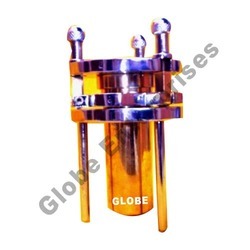
Tell us about your requirement

Price:
Quantity
Select Unit
- 50
- 100
- 200
- 250
- 500
- 1000+
Additional detail
Mobile number
Email

More Products in Leather Testing Equipments Category
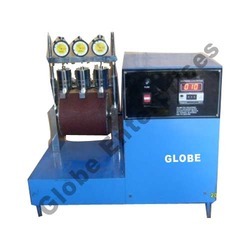
Abrasion Tester for Sole Leather
Price 70000 INR / Unit
Minimum Order Quantity : 1 Unit
Machine Weight : Approx. 40 kg
Usage : Laboratory testing
Max Height : 400 mm (overall)
Test Speed : 40 cycles/minute
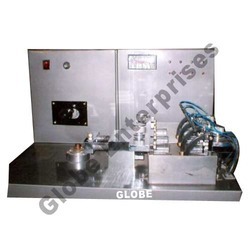
Water Proofness Tester for Leather
Price 95000.0 INR / Unit
Minimum Order Quantity : 1 Unit
Machine Weight : Approx. 22 kg
Usage : Testing water resistance/leakage of leather
Max Height : 260 mm
Test Speed : Adjustable, up to 60 cycles/min
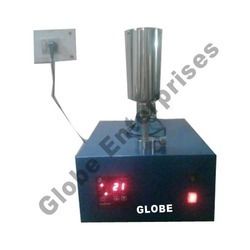
Heat Resistance Tester
Price 40000 INR
Minimum Order Quantity : 1 Piece
Machine Weight : Approx. 60 kg
Usage : Laboratory Thermal Test
Max Height : 350 mm
Test Speed : Uniform, adjustable
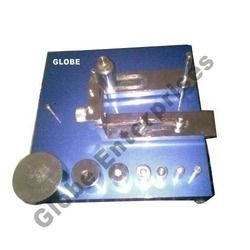
Crackiness Tester
Minimum Order Quantity : 1 Piece
Machine Weight : 45 kg
Usage : Laboratory, Quality Control
Max Height : 450 mm
Test Speed : 60 cycles/min

We are mainly looking inquiries from Ghaziabad, Bahadurgarh, Kanpur, Agra and Chennai.
 Send Inquiry
Our Products
- Fabric Testing Equipments
- Foam Testing Equipments
- Footwear Testing Equipments
- Leather Testing Equipments
- Plastic Testing Equipments
- Rubber Testing Equipments
- Helmet Testing Equipement
- Yarn Testing Equipement
- Paper & Paperboard Testing Equipments
- Bursting Strength Tester
- Quadrant Scale
- Industrial Flammability Tester

373/7, Mukund Nagar, Industrial Area, Ghaziabad - 201001, Uttar Pradesh, India

Mr. Ishamuddin
(Proprietor)
Mobile :08045478105
 Send Inquiry
 Send SMS
Developed and Managed by Infocom Network Private Limited.
