
Call us now :08045478105
 Send Inquiry
 Send Inquiry
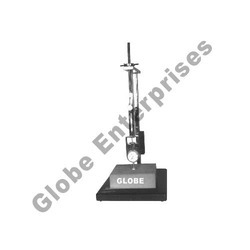
Ball Resilience Tester
Price 35000.0 INR/ Unit
MOQ : 1 Unit
Ball Resilience Tester Specification
- Specimen Size
- 50 mm diameter x 25 mm thickness
- Temperature
- Ambient
- Number of Specimens
- Single Specimen at a time
- Test Material
- Rubber, Foam, Polyurethane, Soft Materials
- Humidity
- Ambient
- Type
- Digital Ball Resilience Tester
- Material
- Mild Steel (Powder Coated)
- Power
- 220V AC, 50Hz
- Power Source
- Electric
- Dimension (L*W*H)
- Approx. 400 x 300 x 700 mm
- Weight
- Approx. 25 kg
- Usage
- Testing Resilience of Rubber or Foam Materials
- Application
- Laboratory Rubber Testing
Ball Resilience Tester Trade Information
- Minimum Order Quantity
- 1 Unit
- Payment Terms
- Cash on Delivery (COD), Cheque, Cash Advance (CA)
- Supply Ability
- 100 Units Per Month
- Delivery Time
- 15 Days
- Main Domestic Market
- All India
About Ball Resilience Tester
Backed by our diligent professionals, we have been engaged in business of manufacturing and exporting Ball Resilience Tester. It has been designed for testing resilience of polyurethane foam required for making mattresses & upholstery seats and elastomers & rubbers as well. This tester works by dropping a steel ball from a predetermined height to specimen and then results are measured in percentage. Offered Ball Resilience Tester is known to have user friendly operation with long lasting life.
Features:
- Provides accurate results
- Rugged structure
- Electrically operated
Technical specification
Diameter of Steel Sphere | 16 mm |
Frequency | 50 Hz |
Automation Grade | Semi-Automatic |
Voltage | 220 V |
Brand | Globe Enterprises |
Material | SS |
Weight of Steel Sphere | 16.3 g |
Standards | ASTM D 3574-1986, ISO 8307-1990, JIS K 6400-1997 |
Power Source | Electric |
Inner Diameter of Acrylic Tube | 40 mm |
Height of Test Specimen | 50 to 150 mm |
Dropping Height | 500 mm |
Advanced Digital Measurement for Reliable Results
Equipped with a digital interface, this Ball Resilience Tester delivers consistent and accurate measurements, eliminating manual errors. Its advanced design streamlines the assessment of rebound resilience, enabling laboratories to maintain stringent quality standards across various soft material applications, such as rubber, foam, and polyurethane.
User-Friendly Operation and Safety Features
The testers ergonomic build, powered by standard 220V AC electric supply, ensures effortless specimen placement and operation for single samples at a time. Powder-coated mild steel construction guarantees both safety and long-term durability, making it an ideal addition to laboratory environments focused on efficiency and accuracy.
FAQs of Ball Resilience Tester:
Q: How does the Digital Ball Resilience Tester work to assess material resilience?
A: The Digital Ball Resilience Tester works by dropping a standardized ball onto a prepared specimen (50 mm diameter x 25 mm thickness) made from rubber, foam, or similar materials. It then digitally measures the rebound height, accurately reflecting the materials elasticity and resilience under ambient laboratory conditions.Q: What materials can be tested with this resilience tester?
A: This instrument is designed to test a variety of soft materials such as rubber, foam, polyurethane, and similar flexible substances. It is particularly suitable for laboratory quality assurance in the rubber and foam manufacturing industries.Q: When should I use a Ball Resilience Tester in material testing processes?
A: You should employ a Ball Resilience Tester during quality control stages, research, or development phases whenever an objective measurement of a materials bounce-back or elastic recovery is required. It helps to ensure products meet specified resilience criteria before release or further processing.Q: Where is the Ball Resilience Tester commonly utilized?
A: The tester is most commonly used in laboratory environments, especially those focused on the development, testing, and quality assessment of rubber, foam, and other soft materials. It is frequently found in research facilities and manufacturing quality control labs.Q: What is the process of preparing and testing a specimen?
A: To test a specimen, prepare a sample with a diameter of 50 mm and a thickness of 25 mm. Place the specimen on the testers platform, operate the digital controls, and allow the device to perform the rebound test, after which results are displayed digitally for analysis.Q: What benefits does a digital resilience tester offer over manual testers?
A: A digital resilience tester provides highly accurate, consistent readings while reducing human error common in manual assessments. Its digital readout allows for faster data recording and improved traceability, which is essential for research and industrial applications.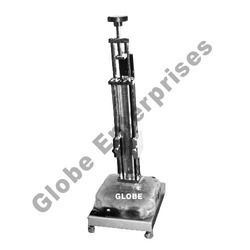
Tell us about your requirement

Price:
Quantity
Select Unit
- 50
- 100
- 200
- 250
- 500
- 1000+
Additional detail
Mobile number
Email

More Products in Foam Testing Equipments Category
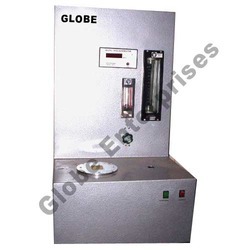
Air Flow Tester
Price 135000.0 INR / Unit
Minimum Order Quantity : 1 Unit
Type : Other, Manual / Digital
Power : Other, 230 V AC, 50 Hz
Specimen Size : Up to 150 mm Diameter
Material : Mild Steel Body with Powder Coating
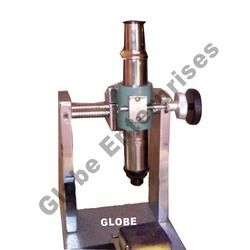
Traverse Thread Counter
Price 25000 INR / Piece
Minimum Order Quantity : 1 Piece
Power : Other, Manual Operation
Specimen Size : Up to 5 cm 5 cm
Material : Stainless Steel Body, High Quality Optical Components
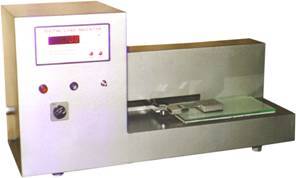
Peel Off Strength Tester
Price 90000.0 INR / Piece
Minimum Order Quantity : 1 Piece
Type : Other, Digital/Manual (depending on model)
Power : Other, 220V AC, 50 Hz
Specimen Size : Standard: 150 x 25 mm or customized
Material : Mild Steel (Powder Coated)
Foam Thickness Gauge
Price 25000 INR / Unit
Minimum Order Quantity : 1 Unit
Type : Other, Dial Thickness Gauge
Power : Other, Manual (No Power Required)
Specimen Size : Maximum 100 mm thickness
Material : Mild Steel (MS)

We are mainly looking inquiries from Ghaziabad, Bahadurgarh, Kanpur, Agra and Chennai.
 Send Inquiry
Our Products
- Fabric Testing Equipments
- Foam Testing Equipments
- Footwear Testing Equipments
- Leather Testing Equipments
- Plastic Testing Equipments
- Rubber Testing Equipments
- Helmet Testing Equipement
- Yarn Testing Equipement
- Paper & Paperboard Testing Equipments
- Bursting Strength Tester
- Quadrant Scale
- Industrial Flammability Tester

373/7, Mukund Nagar, Industrial Area, Ghaziabad - 201001, Uttar Pradesh, India

Mr. Ishamuddin
(Proprietor)
Mobile :08045478105
 Send Inquiry
 Send SMS
Developed and Managed by Infocom Network Private Limited.
