
Call us now :08045478105
 Send Inquiry
 Send Inquiry
Commercial Flammability Tester
Price 55000 INR/ Unit
MOQ : 1 Unit
Commercial Flammability Tester Specification
- Port Size
- 8 mm
- Test Material
- Fabrics, Foam, Composite Panels
- Specimen Size
- (300 0.5) mm x (50 0.5) mm
- Number of Specimens
- 1 at a time
- Type
- Horizontal and Vertical Flammability Tester
- Material
- Stainless Steel
- Power
- 220V/50Hz, 150W
- Power Source
- Electric
- Dimension (L*W*H)
- 860 mm x 400 mm x 615 mm
- Weight
- 50 kg
- Usage
- Laboratory Flame Resistance Testing
- Application
- Textile, Upholstery, Plastics, Commercial Materials
- Safety Feature
- Automatic Gas Shutoff
- Viewing Window
- Tempered Glass
- Environment
- Laboratory/Industrial/QA Testing
- Accessories Supplied
- Specimen Holder, Burner, User Manual
- Burner Angle
- 0 and 45 adjustable
- Data Output
- USB/RS232 interface
- Display
- LED digital
- Ignition Method
- Automatic Electric Ignition
Commercial Flammability Tester Trade Information
- Minimum Order Quantity
- 1 Unit
- Payment Terms
- Cheque
- Supply Ability
- 100 Units Per Month
- Delivery Time
- 1 Week
- Main Export Market(s)
- Australia, Central America, North America, South America, Eastern Europe, Western Europe, Middle East, Africa, Asia
- Main Domestic Market
- All India
- Certifications
- ISO 9001-2008
About Commercial Flammability Tester
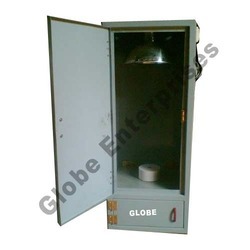
The GLOBE Inclined Plane Flammability Tester for fabrics consists of a specimen rack for mounting the test specimen holder, a specimen holder in which the test specimens are held for conducting the test, arrangement to enable a standardized flame to impinge on the test specimen, and a timer to record the time taken by the flame to propagate through a distance of 127 mm. The various components are mounted inside a draught proof stainless steel sheet enclosure.
The specimen rack provides support for the holders in which the specimens are mounted. Its angle of inclination is 45°. The rack can be moved sideways to enable fabrics of different thicknesses to be set at the specified distance from the tip of the jet with the help of an adjusting screw. A built-in finger is provided to gauge this distance for setting it to the desired value.
Technical details
Dimension | 750 x 360 x 940 mm |
Voltage | AC 220 V |
Frequency | 50 Hz |
Brand | Globe Enterprises |
Material | SS |
Weight | 25 Kg |
Standards | IS 11871-1986 |
Power source | Electric |
Advanced Safety Features for Reliable Testing
Equipped with an automatic gas shutoff system and a secure tempered glass viewing window, this flammability tester prioritizes operator safety throughout each test run. The durable stainless steel build maintains device integrity even under rigorous laboratory or industrial usage, while the precise electric ignition further reduces manual handling risks.
Comprehensive Data Management and User-Friendly Operation
The intuitive LED digital display offers real-time monitoring of your flame resistance tests, while USB/RS232 outputs enable effortless transfer and storage of results. With a supplied specimen holder, burner, and detailed user manual, set-up is straightforward for consistent quality assurance in every application.
FAQs of Commercial Flammability Tester:
Q: How does the automatic electric ignition improve the testing process?
A: The automatic electric ignition streamlines the flammability testing procedure by providing consistent and immediate burner activation without manual intervention. This ensures uniform test conditions and enhances operator safety by minimizing exposure to open flames.Q: What materials can be tested using this flammability tester?
A: This commercial flammability tester is designed to evaluate flame resistance in a variety of materials, including textiles, fabrics, foams, upholstery, plastics, and composite panels. It is suitable for both commercial and industrial materials subjected to laboratory testing standards.Q: Where is this tester typically used?
A: Primarily intended for laboratory, industrial, and quality assurance (QA) environments, the tester is used by manufacturers, suppliers, and exporters in industries focused on textiles, upholstery, plastics, and composite materials. Its robust design and precise control make it ideal for regular compliance and research testing.Q: What is the process for conducting a test with this instrument?
A: To conduct a test, a specimen of the specified dimensions is placed in the specimen holder. The burner angle is set to 0 or 45, and the automatic ignition triggers the flame. The test is observed through a tempered glass window, with data displayed digitally and available for export via USB or RS232 interface. The automatic gas shutoff enhances safety if abnormal conditions are detected.Q: When should this flammability tester be used?
A: Use this tester whenever there is a need to determine flame resistance for quality control, regulatory compliance, or product development purposes. It is especially recommended for pre-market testing of commercial fabrics, foam, and plastics according to industry safety standards.Q: How is data from tests exported and recorded?
A: Test data can be easily exported via the USB or RS232 interfaces, allowing integration with laboratory information management systems or for detailed reporting and archival purposes. The clear digital display also aids in immediate result interpretation and record-keeping.Q: What are the benefits of using adjustable burner angles during testing?
A: Adjustable burner angles (0 and 45) enable testing of specimens in both horizontal and vertical orientations, which mirrors real-world scenarios more accurately. This flexibility allows compliance with a broader range of industry and safety standards while providing comprehensive insights into material behavior under flame exposure.
Tell us about your requirement

Price:
Quantity
Select Unit
- 50
- 100
- 200
- 250
- 500
- 1000+
Additional detail
Mobile number
Email

More Products in Fabric Testing Equipments Category

Spray Tester
Price 7000 INR
Minimum Order Quantity : 1 Unit
Weight : About 10 kg
Type : Other, Spray Tester
Usage : Water Repellency Test
Specimen Size : 180 mm 180 mm
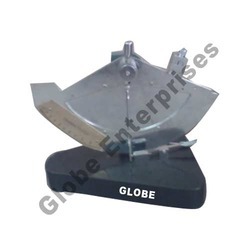
Elmendorf Tearing Tester
Price 35000.0 INR / Unit
Minimum Order Quantity : 1 Unit
Weight : Approx. 30 kg
Type : Other, Elmendorf Tearing Tester
Usage : To determine tearing strength of paper, fabric, film, and other sheet materials
Specimen Size : 63 mm x 76 mm (standard) or as per test requirements
Drape Meter
Price 80000 INR / Unit
Minimum Order Quantity : 1 Unit
Weight : 4.5 kg
Type : Other, Drape Meter
Usage : Measuring drape coefficient of fabrics
Specimen Size : Diameter 24 cm (standard) or as per requirement
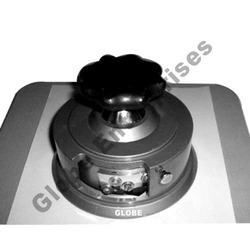
Round Sample Cutter
Price 6500 INR
Minimum Order Quantity : 1 Piece
Weight : Approximately 1.5 kg
Type : Other, Round Sample Cutter
Usage : Cutting Circular Textile Samples
Specimen Size : 100 cm (Diameter approx. 113 mm)

We are mainly looking inquiries from Ghaziabad, Bahadurgarh, Kanpur, Agra and Chennai.
 Send Inquiry
Our Products
- Fabric Testing Equipments
- Foam Testing Equipments
- Footwear Testing Equipments
- Leather Testing Equipments
- Plastic Testing Equipments
- Rubber Testing Equipments
- Helmet Testing Equipement
- Yarn Testing Equipement
- Paper & Paperboard Testing Equipments
- Bursting Strength Tester
- Quadrant Scale
- Industrial Flammability Tester

373/7, Mukund Nagar, Industrial Area, Ghaziabad - 201001, Uttar Pradesh, India

Mr. Ishamuddin
(Proprietor)
Mobile :08045478105
 Send Inquiry
 Send SMS
Developed and Managed by Infocom Network Private Limited.
