
Call us now :08045478105
 Send Inquiry
 Send Inquiry
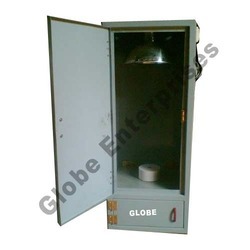
Pilling Tester
MOQ : 1 Piece
Pilling Tester Specification
- Test Range
- Standard Martindale test range
- Number of Specimens
- Up to 4 specimens simultaneously
- Specimen Size
- Dimensions as per ISO and IS standards, typically 38 mm diameter
- Temperature
- Ambient, 10C 40C operating range
- Humidity
- Up to 80% RH (relative humidity)
- Type
- Digital Pilling Tester
- Material
- Mild Steel with Powder Coated finish
- Power
- 220V AC, 50 Hz, 60W
- Power Source
- Electric
- Dimension (L*W*H)
- 520 mm x 260 mm x 250 mm
- Weight
- 28 kg approx
- Usage
- Determines the pilling and fuzzing resistance of textile fabrics
- Application
- Textile Testing Laboratories, Garment Industries, Research Institutes
- Accessory Supplied
- Set of rubber tubes and templates
- Display
- Digital LCD counter
- Abrasion Material
- Standard polyurethane foam & fabric supplied
- Drive Mechanism
- Rotating motion with balanced drive
- Noise Level
- < 60 dB
- Timer
- Programmable digital timer up to 9999 cycles
- Speed
- 602 cycles per minute
- Number of Test Heads
- 4
Pilling Tester Trade Information
- Minimum Order Quantity
- 1 Piece
- Payment Terms
- Cash on Delivery (COD), Cheque, Cash Advance (CA)
- Supply Ability
- 10 Pieces Per Week
- Delivery Time
- 1 Week
- Main Domestic Market
- All India
About Pilling Tester
Pilling is a fabric surface fault characterized by little pills of entangled fibres clinging to the surface. These are formed during wearing or washing by the entanglement of the loose fibres, which protrude from the fabric surface, and development of these into spherical bundles anchored to the fabric by a few unbroken fibres. These give a very unsightly look to the garments.
To determine the tendency to form pills, test specimens taken from the fabric sample are rubbed against each other under controlled conditions and the appearance of the test specimen after rubbing for the specified period is compared against standard rating photographs for grading the fabric under test.
Technical details
Brand | Globe Enterprises |
Voltage | AC 230 V |
Rubber Tubes Dimension | 32 x 25.5 x 140 mm (Outer Diameter x Inside Diameter x Length) |
Power | 1/4 HP |
Phase | Single Phase |
Inside Wooden Box Dimension | 225 x 225 x 225 mm |
Counter | 5 Digit |
Cork Lining Thickness | 3 mm |
Efficient and Reliable Textile Pilling Assessment
Designed for precision, the Digital Pilling Tester provides consistent and accurate evaluation of textile pilling using standard Martindale protocols. With its ability to accommodate four specimens simultaneously, it streamlines laboratory workflows and enhances productivity for fabric quality assurance.
User-Friendly Digital Features
Equipped with an intuitive LCD display, the tester allows easy cycle monitoring and timer programming. The quiet operation and programmable testing up to 9999 cycles make it ideal for continuous use in professional textile testing environments without causing disturbance.
FAQs of Pilling Tester:
Q: How does the Digital Pilling Tester with Display determine pilling resistance in fabrics?
A: The tester simulates fabric abrasion using a balanced rotating motion and standard Martindale methods. Test specimens are subjected to rub cycles against controlled polyurethane foam and fabric, allowing precise measurement of pilling and fuzzing resistance as per ISO and IS standards.Q: What accessories are included with the pilling tester to facilitate testing?
A: Each unit comes with a set of rubber tubes and templates, as well as standard polyurethane foam and fabric, ensuring that users have the necessary materials to conduct tests according to industry standards.Q: When should the programmable digital timer be set for testing, and what is its maximum cycle range?
A: The digital timer can be programmed before test initiation and supports up to 9999 cycles, allowing users to customize test duration according to specific fabric requirements or standard procedures.Q: Where is the Digital Pilling Tester primarily used?
A: This tester is widely used in textile testing laboratories, garment manufacturing industries, and research institutions for quality control and research purposes.Q: What is the process for preparing and conducting a pilling test using this instrument?
A: Specimens, prepared according to size standards (typically 38 mm diameter), are placed on the test heads. The machine is set to the desired cycle count and speed, after which the rotating drive mechanism initiates controlled abrasion against reference materials.Q: How does the use of standard Martindale test range benefit textile assessments?
A: Utilizing the Martindale range ensures that test results are reliable, comparable internationally, and compliant with recognized industry standards, aiding manufacturers and researchers in producing high-quality textiles.Q: What advantages does the powder-coated mild steel construction offer for durability and maintenance?
A: The powder-coated mild steel body provides robust protection against corrosion and wear, making the tester durable and easy to maintain, even in high-usage laboratory environments.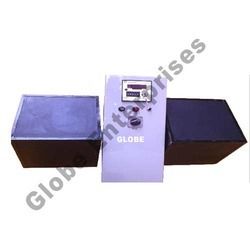
Tell us about your requirement

Price:
Quantity
Select Unit
- 50
- 100
- 200
- 250
- 500
- 1000+
Additional detail
Mobile number
Email

More Products in Fabric Testing Equipments Category
Spray Tester
Price 7000 INR
Minimum Order Quantity : 1 Unit
Weight : About 10 kg
Type : Other, Spray Tester
Usage : Water Repellency Test
Dry Cleaning Apparatus
Price Range 10000.00 - 35000.00 INR
Minimum Order Quantity : 1 Piece
Weight : 150 kg
Type : Other, Dry Cleaning Apparatus
Perspirometer Machine
Price Range 5000.00 - 10000.00 INR
Minimum Order Quantity : 1 Piece
Weight : Approx. 6 Kg
Type : Other, Perspirometer Machine
Usage : Textile Testing
Drape Meter
Price 80000 INR / Unit
Minimum Order Quantity : 1 Unit
Weight : 4.5 kg
Type : Other, Drape Meter
Usage : Measuring drape coefficient of fabrics

We are mainly looking inquiries from Ghaziabad, Bahadurgarh, Kanpur, Agra and Chennai.
 Send Inquiry
Our Products
- Fabric Testing Equipments
- Foam Testing Equipments
- Footwear Testing Equipments
- Leather Testing Equipments
- Plastic Testing Equipments
- Rubber Testing Equipments
- Helmet Testing Equipement
- Yarn Testing Equipement
- Paper & Paperboard Testing Equipments
- Bursting Strength Tester
- Quadrant Scale
- Industrial Flammability Tester

373/7, Mukund Nagar, Industrial Area, Ghaziabad - 201001, Uttar Pradesh, India

Mr. Ishamuddin
(Proprietor)
Mobile :08045478105
 Send Inquiry
 Send SMS
Developed and Managed by Infocom Network Private Limited.
