
Call us now :08045478105
 Send Inquiry
 Send Inquiry
Din Abrasion Tester
Price 60000 INR/ Unit
MOQ : 1 Unit
Din Abrasion Tester Specification
- Port Size
- Standard sample holder
- Equipment Type
- Abrasion Tester
- Hardness
- Applicable for rubber hardness up to 85 Shore A
- Power Supply
- 220V AC, 50/60Hz
- Resolution
- 0.01 mm
- Response Time
- Instant
- Features
- Sturdy construction, Easy specimen mounting, High precision measurement
- Display Type
- Digital LCD display
- Operating Voltage
- 220V AC
- Max Height
- 350 mm
- Measuring Range
- 0~9999 cycles
- Frequency
- 50/60 Hz
- Test Range
- 0~9999 cycles
- Specimen Size
- 6 mm thickness, 16 mm width
- Application
- Abrasion resistance testing for rubber, footwear, tires, conveyor belt materials, etc.
- Number of Specimens
- Single Specimen
- Interface Type
- Manual/Touch Keys
- Accuracy
- 0.1 mm
- Usage
- Quality Control, Laboratory Testing
- Capacity
- 2 W
- Machine Weight
- 70 kg
- Test Speed
- 40 1 rpm
- Test Width
- 16 mm
- Test Stroke
- 40 m
- Control Mode
- Digital
Din Abrasion Tester Trade Information
- Minimum Order Quantity
- 1 Unit
- Payment Terms
- Cash Advance (CA), Cash in Advance (CID), Cheque
- Supply Ability
- 100 Units Per Month
- Delivery Time
- 1 Week
- Main Export Market(s)
- Asia
- Main Domestic Market
- All India
- Certifications
- ISO Certified
About Din Abrasion Tester
Din Abrasion Tester
- IS 3400 (Part 3) 1987 Methods of Test for Vulcanized Rubbers.
- Part 3 Abrasion Resistance using a Rotating Cylindrical Drum Device.
Technical Data
Diameter of test specimen | 16 ± 0.2 mm |
Height of test specimen | 6 to 10 mm |
Diameter of rotating drum | 150 mm |
Length of rotating drum | 470 mm |
Speed of rotation of cylinder | 40 ± 2 RPM |
Precise and Reliable Abrasion Testing
Engineered for accuracy, the Din Abrasion Tester features a digital LCD display and touch/manual controls, allowing precise monitoring and input. Its sturdy construction not only ensures durability, but also facilitates easy specimen mounting and stable operation during rigorous testing, making it effective for industrial environments.
Versatile Application Across Industries
Specifically built for abrasion resistance testing, this device is suitable for a wide array of materials including rubber, footwear components, tires, and conveyor belt surfaces. This versatility makes it a valuable asset for manufacturers, exporters, and suppliers aiming to maintain or improve product quality standards.
High Efficiency and Easy Operation
The device boasts instant response times and digital control modes, streamlining the testing process. With an easy-to-read display and standard sample holders, the tester can quickly be set up for a single specimen, ensuring fast, repeatable, and reliable results for daily quality control or laboratory analysis.
FAQs of Din Abrasion Tester:
Q: How does the Din Abrasion Tester measure abrasion resistance in rubber materials?
A: The Din Abrasion Tester operates by applying a controlled rubbing action on a single rubber specimen using standard sample holders, precisely measuring material loss over a set number of cycles (09999 cycles) at 40 1 rpm. The digital LCD display provides instant, highly accurate results (to 0.1 mm, with 0.01 mm resolution), allowing users to quantitatively assess abrasion resistance as per industry standards.Q: What types of materials can be tested with this abrasion tester?
A: This tester is designed for evaluating abrasion resistance in a variety of flexible and elastomeric materials including rubber (up to 85 Shore A hardness), footwear soles, tire components, and conveyor belt samples, making it suitable for industries involved in rubber goods and quality assurance.Q: When should I use the Din Abrasion Tester in my quality control process?
A: The Din Abrasion Tester should be utilized whenever you need to verify the durability or compliance of rubber and elastomeric materials before production, after material development, or during regular quality control checks to ensure your products meet required abrasion resistance specifications.Q: Where can the Din Abrasion Tester be installed for optimal operation?
A: Owing to its sturdy 70 kg design, the tester is best suited for installation in quality control labs, R&D facilities, and production testing areas where precise and repeatable material testing is essential. It operates on a standard 220V AC power supply, making it compatible with most laboratory environments in India.Q: What is the process for conducting a test using this machine?
A: Testing begins by mounting a single specimen of specified size (6 mm thickness, 16 mm width) onto the standard sample holder. The operator then sets the desired test parameters using the digital controls, starts the machine, and monitors the test via the digital LCD display until the desired number of cycles or abrasion is reached.Q: How does the digital control mode benefit laboratory testing?
A: The digital control mode, combined with a user-friendly LCD display and touch/manual key interface, ensures accurate input, immediate start/stop response, and clear result visualization. This significantly reduces human error and simplifies the monitoring of critical testing variables, ensuring data reliability.Q: What advantages does the Din Abrasion Tester provide to manufacturers and exporters?
A: Manufacturers and exporters benefit from precise, repeatable test results, quick specimen setup, and reliable operation. This enables consistent quality assurance, helps meet international standards, and supports efficient R&D, contributing to improved product performance and market competitiveness.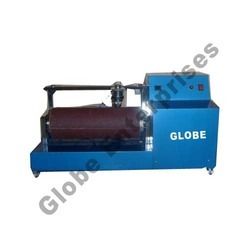
Tell us about your requirement

Price:
Quantity
Select Unit
- 50
- 100
- 200
- 250
- 500
- 1000+
Additional detail
Mobile number
Email

More Products in Rubber Testing Equipments Category
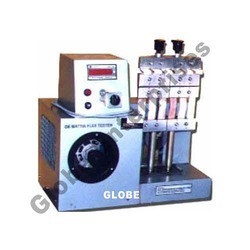
Demattia Flex Tester
Price 85000.0 INR / Unit
Minimum Order Quantity : 1 Unit
Usage : Rubber testing laboratory equipment
Capacity : Six test stations
Temperature : Ambient
Machine Weight : Approx. 65 kg
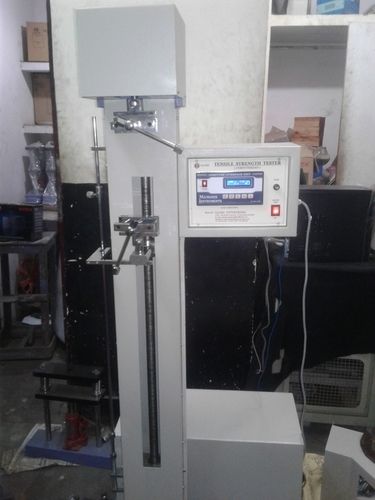
Tensile Strength Tester
Price 125000 INR / Unit
Minimum Order Quantity : 1 Unit
Usage : Material strength testing
Capacity : 5 kN, 10 kN (options available)
Temperature : 10C~35C
Machine Weight : Approx. 50 kg
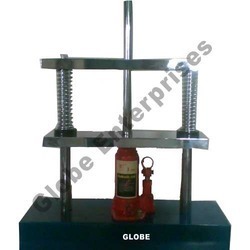
Specimen Cutting Press
Price 17500.0 INR / Unit
Minimum Order Quantity : 1 Unit
Usage : Laboratory specimen cutting
Capacity : Up to 10 tonnes cutting force
Temperature : 0C to 50C (ambient)
Machine Weight : Approx. 60 kg
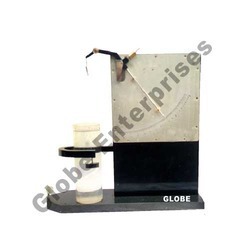
Specific Gravity Balance
Price 22500.0 INR / Unit
Minimum Order Quantity : 1 Unit
Usage : For Laboratory Testing of Material Density
Capacity : 200 g
Temperature : 10C to 40C
Machine Weight : Approx. 7.5 kg

We are mainly looking inquiries from Ghaziabad, Bahadurgarh, Kanpur, Agra and Chennai.
 Send Inquiry
Our Products
- Fabric Testing Equipments
- Foam Testing Equipments
- Footwear Testing Equipments
- Leather Testing Equipments
- Plastic Testing Equipments
- Rubber Testing Equipments
- Helmet Testing Equipement
- Yarn Testing Equipement
- Paper & Paperboard Testing Equipments
- Bursting Strength Tester
- Quadrant Scale
- Industrial Flammability Tester

373/7, Mukund Nagar, Industrial Area, Ghaziabad - 201001, Uttar Pradesh, India

Mr. Ishamuddin
(Proprietor)
Mobile :08045478105
 Send Inquiry
 Send SMS
Developed and Managed by Infocom Network Private Limited.
