
Call us now :08045478105
 Send Inquiry
 Send Inquiry
Heat Resistance Tester
MOQ : 1 Piece
Heat Resistance Tester Specification
- Max Height
- 350 mm
- Measuring Range
- Ambient to 300C
- Response Time
- <5 sec
- Mounting Type
- Bench Top
- Test Range
- Up to 300C
- Temperature
- Ambient to 300C (Max)
- Features
- Easy Sample Mounting, Overheat Protection, Uniform Heating, Digital Timer
- Equipment Type
- Heat Resistance Tester
- Power Supply
- 220V AC, 50Hz
- Display Type
- Digital LED
- Specimen Size
- (25 x 25) mm
- Port Size
- Standard gas inlet (1/4 NPT)
- Application
- Determining thermal resistance of plastic, rubber, or synthetic specimens
- Accuracy
- 1C
- Resolution
- 0.1C
- Interface Type
- Manual/Digital Switch
- Operating Voltage
- 220V
- Frequency
- 50 Hz
- Usage
- Laboratory Thermal Test
- Capacity
- Single/Multiple specimen
- Machine Weight
- Approx. 60 kg
- Test Speed
- Uniform, adjustable
- Test Width
- 100 mm
- Test Stroke
- Up to 100 mm
- Control Mode
- Digital Timer and Manual
- Calibration
- Calibration certificate provided
- Insulation Type
- Ceramic Fiber Blanket
- Specimen Holder Material
- SS304 stainless steel
- Operating Temperature Range
- Ambient to 300C
Heat Resistance Tester Trade Information
- Minimum Order Quantity
- 1 Piece
- Payment Terms
- Telegraphic Transfer (T/T), Cheque, Cash Advance (CA)
- Supply Ability
- 10 Pieces Per Week
- Delivery Time
- 1 Week
- Packaging Details
- Standard
- Main Domestic Market
- All India
- Certifications
- ISO 9001-2008
About Heat Resistance Tester
Heat Resistance Tester
Incorporated with modern features, we manufacture, supply and export a wide range of Heat Resistance Tester. Widely used to measure the heat resistances of painting and building materials, these testers are manufactured by our skilled professional using quality components. The demand of our offered Heat Resistance Tester is increasing at a rapid pace as these equipments are easy to use, require less maintenance and also sturdy in construction. We duly check these testing equipments on quality parameters before supplying to clients.
Further details:
The resistance of the surface finish and colour of leather to action of heating such as may occur when shoes are flamed, hot blasted, ironed, or subjected to other shoe making operations involving contact with hot tools, machine parts, air and gases, is determined by pressing a piece of finished leather under a copper bit maintained at different elevated temperatures for a period of five seconds under a specified load and evaluating the change in colour produced with the help standard grey scale for change in colour.
Technical specification
Material | SS |
Usage/Application | Insulation Resistance |
Brand | Globe Enterprises |
Display | Digital |
Frequency | 50 Hz |
Power Source | Electric |
Voltage | 220 V |
Standards | IS 9537 (Part 4)-1983 |
Advanced Thermal Testing Performance
Designed for precision, the Heat Resistance Tester delivers uniform heating across a 100 mm test width, supporting a test stroke of up to 100 mm. Its fast response time (<5 seconds) ensures rapid, accurate results with a high resolution of 0.1C and accuracy of 1C. The inclusion of an intuitive digital LED display allows for seamless monitoring and adjustment, making it ideal for rigorous laboratory assessments of thermal properties in various specimens.
Built for Safety and Efficiency
Safety and user convenience are prioritized with features such as overheat protection, a ceramic fiber blanket for insulation, and easy sample mounting. The SS304 specimen holder ensures corrosion resistance and durability, while the compact, bench-top mounting saves valuable laboratory space. The digital and manual modes, paired with a calibration certificate, cater to regulatory and quality assurance needs for both single and multiple specimen testing.
FAQs of Heat Resistance Tester:
Q: How is the Heat Resistance Tester operated and controlled during tests?
A: The Heat Resistance Tester can be operated using both manual and digital timer control modes. This flexibility allows users to adjust test speed and test duration to meet specific test requirements. The uniform heating feature and digital LED display make monitoring and controlling the conditions straightforward.Q: What is the testing process for thermal resistance in plastic or rubber specimens?
A: To conduct a test, mount a single or multiple specimens of size 25 x 25 mm into the SS304 holder, set your desired temperature (up to 300C) using the digital interface, and adjust the test speed as required. The equipment heats the specimen while the thermal response is monitored through the digital display, with accurate measurements collected rapidly due to its <5-second response time.Q: When should the Heat Resistance Tester be recalibrated?
A: It is recommended to recalibrate the tester as per your laboratorys standard operating procedure or after extensive use, to ensure measurement accuracy. The unit is supplied with a calibration certificate, and periodic recalibration maintains high precision and compliance with quality norms.Q: Where is this Heat Resistance Tester best suited for use?
A: This device is designed for laboratory environments, particularly for testing the thermal resistance of plastics, rubbers, or synthetic materials. It is an excellent choice for manufacturers, exporters, and suppliers involved in quality control, material research, or product development.Q: What are the main benefits of using this Heat Resistance Tester?
A: Key benefits include highly accurate and rapid results (1C, response <5 sec), ease of sample mounting, overheat protection, and the ability to handle single or multiple specimens. Its digital and manual control options provide operational flexibility, while the robust construction ensures longevity and safety.Q: How does the insulation and specimen holder material improve testing reliability?
A: The ceramic fiber blanket insulation minimizes heat loss and ensures consistent thermal conditions, improving test accuracy. The SS304 stainless steel specimen holder provides durability and resists corrosion, which is essential for maintaining sample integrity during high-temperature testing.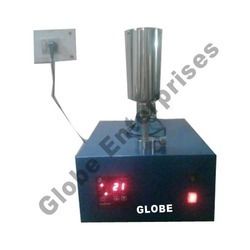
Tell us about your requirement

Price:
Quantity
Select Unit
- 50
- 100
- 200
- 250
- 500
- 1000+
Additional detail
Mobile number
Email

More Products in Leather Testing Equipments Category
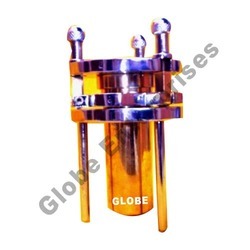
Water Vapor Absorption Tester
Price 15000.0 INR / Piece
Minimum Order Quantity : 1 Piece
Max Height : 330 mm
Number of Specimens : 2
Response Time : Immediate
Temperature : 10C~40C
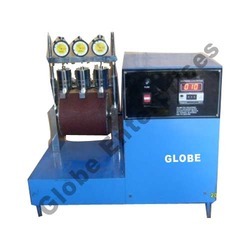
Abrasion Tester for Sole Leather
Price 70000 INR / Unit
Minimum Order Quantity : 1 Unit
Max Height : 400 mm (overall)
Number of Specimens : 1 specimen per test
Response Time : <1 second
Temperature : 23C (2C)
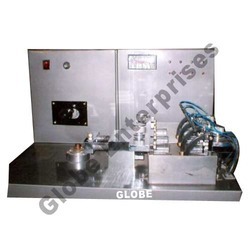
Water Proofness Tester for Leather
Price 95000.0 INR / Unit
Minimum Order Quantity : 1 Unit
Max Height : 260 mm
Number of Specimens : 1~2
Response Time : Instantaneous measurement
Temperature : Room temperature (10C~35C)

Lastometer Equipment
Price 50000 INR / Piece
Minimum Order Quantity : 1 Piece
Max Height : Approx. 400 mm
Number of Specimens : Single specimen at a time
Response Time : Immediate
Temperature : 10C to 35C

We are mainly looking inquiries from Ghaziabad, Bahadurgarh, Kanpur, Agra and Chennai.
 Send Inquiry
Our Products
- Fabric Testing Equipments
- Foam Testing Equipments
- Footwear Testing Equipments
- Leather Testing Equipments
- Plastic Testing Equipments
- Rubber Testing Equipments
- Helmet Testing Equipement
- Yarn Testing Equipement
- Paper & Paperboard Testing Equipments
- Bursting Strength Tester
- Quadrant Scale
- Industrial Flammability Tester

373/7, Mukund Nagar, Industrial Area, Ghaziabad - 201001, Uttar Pradesh, India

Mr. Ishamuddin
(Proprietor)
Mobile :08045478105
 Send Inquiry
 Send SMS
Developed and Managed by Infocom Network Private Limited.
