
Call us now :08045478105
 Send Inquiry
 Send Inquiry
Shear Fatigue Tester
Price 95000.0 INR/ Piece
MOQ : 1 Piece
Shear Fatigue Tester Specification
- Port Size
- 6 mm
- Temperature
- Ambient to 70C
- Humidity
- Up to 95% RH (Environment Controlled)
- Test Range
- Up to 100 N
- Specimen Size
- Standard: 25mm x 100mm
- Test Material
- Rubber, Adhesive, Polymer
- Number of Specimens
- Single or Multiple
- Type
- Shear Fatigue Tester
- Material
- Mild Steel
- Power
- 220V/50Hz, 1 Phase
- Power Source
- Electric
- Dimension (L*W*H)
- 750mm x 450mm x 350mm
- Weight
- Approx. 68 Kg
- Usage
- Laboratory Testing
- Application
- Rubber, Adhesive & Polymer Shear Fatigue Testing
Shear Fatigue Tester Trade Information
- Minimum Order Quantity
- 1 Piece
- Payment Terms
- Cash on Delivery (COD), Telegraphic Transfer (T/T), Cash Advance (CA), Cheque
- Supply Ability
- 100 Pieces Per Month
- Delivery Time
- 15 Days
- Main Domestic Market
- All India
About Shear Fatigue Tester
Shear Fatigue TesterThe Ability Of Polyurethane Foam Slabs To Withstand The Effect Of Repeated Compressions Is Determined With The Help Of A Shear Fatigue Test. In This Test, Test Specimen In Shape Of A Square Block Is Held Over A Flat Reciprocating Platform And Is Pressed Down From The Top By A Horizontal Cylindrical Roller Inclined At An Angle Of 15 To The Direction Of Motion Of The Platform. The Platform Is Moved For A Specified Number Of Cycles And The Effect Of Repeated Compressions Produced On The Test Specimen Is Evaluated By Finding The Change In Its Thickness And Indentation Hardness Index cont .
Technical specification
|
Angle of Inclination |
15 Degree |
|
Voltage |
AC 220 V |
|
Frequency |
50 Hz |
|
Stroke Length of Platform |
330 mm |
|
Size of Test Specimen |
380 x 380 mm |
|
Power Source |
Electric |
|
Length of Roller |
460 mm |
|
Flexing Frequency |
28 CPM |
|
Distance Between Holes |
19 mm |
|
Diameter of Roller |
75 mm |
|
Diameter of Hole on Platform |
6 mm |
|
Brand |
Globe Enterprises |
Advanced Design and Functionality
Engineered from mild steel, the Shear Fatigue Tester ensures stability and durability throughout extensive testing. Its electric operation streamlines laboratory workflows, while environment controls enable accurate simulation of real-world conditions to produce reliable, reproducible results for a variety of rubber, adhesive, and polymer specimens.
Reliable Performance for Laboratory Testing
Purpose-built for laboratory environments, this tester facilitates high-precision measurements for both research and quality assurance. Its design allows for testing single or multiple specimens, featuring a simple user interface for easy operation. The standardized specimen size and adjustable test parameters enhance flexibility for diverse applications.
Versatile Applications in Material Science
Suitable for a wide scope of applications, the device supports comprehensive fatigue testing in rubber, adhesive, and polymer industries. Standard ports and adaptable mounting provide seamless integration into laboratory protocols, aiding in comparative analysis and material benchmarking.
FAQs of Shear Fatigue Tester:
Q: How does the Shear Fatigue Tester evaluate material performance?
A: This tester applies repeated shear forces to specimens, such as rubber, adhesives, or polymers, within a controlled environment. The resulting fatigue behavior is monitored and recorded, enabling analysis of durability and failure points under stress.Q: What materials and sample sizes can be tested with this machine?
A: The device accommodates standard samples (25mm x 100mm) composed of rubber, adhesive, or polymer materials. It is suitable for both single and multiple specimen testing, making it versatile for diverse laboratory needs.Q: When is it appropriate to use a Shear Fatigue Tester in research or industry?
A: Utilize this tester during quality control, product development, or comparative studies where understanding material endurance under cyclic shear loading is critical. It is essential for validating material performance and improving reliability in end-use applications.Q: Where is the Shear Fatigue Tester commonly used?
A: This equipment is primarily used in laboratories affiliated with material science, manufacturing, automotive, aerospace, and polymer industries. It is a preferred choice among exporters, manufacturers, and suppliers across India for robust laboratory testing.Q: What is the process for conducting a test using the Shear Fatigue Tester?
A: Prepare the specimen according to standard dimensions (25mm x 100mm), place it within the test grips, set the required test parameters (load up to 100 N, temperature, and humidity), and initiate the cycle. The machine will apply shear loads until material fatigue or failure is observed.Q: How does this tester benefit research and quality assurance efforts?
A: By simulating real-world fatigue conditions with adjustable environmental controls, the Shear Fatigue Tester helps researchers and manufacturers identify weaknesses, improve formulations, and ensure products meet durability standards, ultimately enhancing overall material performance.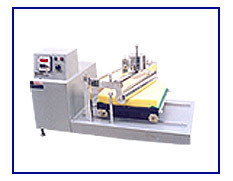
Tell us about your requirement

Price:
Quantity
Select Unit
- 50
- 100
- 200
- 250
- 500
- 1000+
Additional detail
Mobile number
Email

More Products in Foam Testing Equipments Category

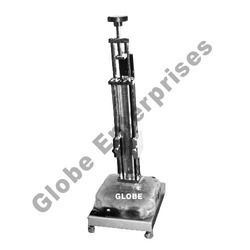
Pounding Tester
Price 125000.0 INR / Piece
Minimum Order Quantity : 1 Piece
Specimen Size : Diameter 44mm x Thickness 10mm (approx.)
Weight : Approx. 23 kg
Power : Other, 220V AC, 50 Hz
Material : Mild Steel Body
Ball Resilience Tester
Price 35000.0 INR / Unit
Minimum Order Quantity : 1 Unit
Specimen Size : 50 mm diameter x 25 mm thickness
Weight : Approx. 25 kg
Power : Other, 220V AC, 50Hz
Material : Mild Steel (Powder Coated)
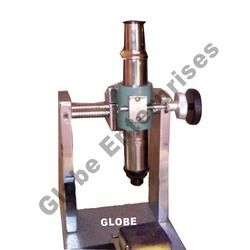
Traverse Thread Counter
Price 25000 INR / Piece
Minimum Order Quantity : 1 Piece
Specimen Size : Up to 5 cm 5 cm
Weight : Approx 300g
Power : Other, Manual Operation
Material : Stainless Steel Body, High Quality Optical Components
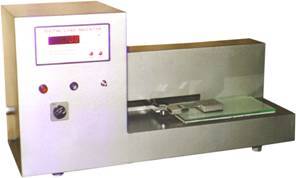
Peel Off Strength Tester
Price 90000.0 INR / Piece
Minimum Order Quantity : 1 Piece
Specimen Size : Standard: 150 x 25 mm or customized
Weight : Approx. 45 kg
Power : Other, 220V AC, 50 Hz
Material : Mild Steel (Powder Coated)

We are mainly looking inquiries from Ghaziabad, Bahadurgarh, Kanpur, Agra and Chennai.
 Send Inquiry
Our Products
- Fabric Testing Equipments
- Foam Testing Equipments
- Footwear Testing Equipments
- Leather Testing Equipments
- Plastic Testing Equipments
- Rubber Testing Equipments
- Helmet Testing Equipement
- Yarn Testing Equipement
- Paper & Paperboard Testing Equipments
- Bursting Strength Tester
- Quadrant Scale
- Industrial Flammability Tester

373/7, Mukund Nagar, Industrial Area, Ghaziabad - 201001, Uttar Pradesh, India

Mr. Ishamuddin
(Proprietor)
Mobile :08045478105
 Send Inquiry
 Send SMS
Developed and Managed by Infocom Network Private Limited.
