
Call us now :08045478105
 Send Inquiry
 Send Inquiry
Bundesmann Water Repellency Tester
Price 125000 INR/ Unit
MOQ : 1 Unit
Bundesmann Water Repellency Tester Specification
- Humidity
- Up to 95% RH (ambient controlled)
- Test Range
- Up to 4 specimens simultaneously
- Port Size
- 16 mm (spray nozzles)
- Temperature
- Ambient to 35C
- Specimen Size
- 200 mm diameter
- Gas Pressure
- Adjustable up to 2 bar
- Test Material
- Textiles, nonwovens, technical fabrics
- Number of Specimens
- 4
- Type
- Water Repellency Tester
- Material
- Stainless Steel and Acrylic
- Power
- 450 W
- Power Source
- Electric
- Dimension (L*W*H)
- 1050 mm x 570 mm x 1640 mm
- Weight
- 95 kg
- Usage
- Determining water repellency of textiles and fabrics
- Application
- Textile and fabric testing laboratories
- Observation Windows
- Transparent acrylic for visual inspection
- Water Spray Duration
- 10 minutes per cycle
- Controls
- Digital Timer and RPM Indicator
- Water Flow Rate
- 600 ml/minute per nozzle
- Standards Compliance
- ISO 9865, DIN 53888, EN 29865
- Rotating Disc Speed
- 60 rpm
- Falling Height of Water Drops
- 1500 mm
Bundesmann Water Repellency Tester Trade Information
- Minimum Order Quantity
- 1 Unit
- Payment Terms
- Cheque
- Supply Ability
- 100 Units Per Month
- Delivery Time
- 2 Week
- Main Export Market(s)
- Asia
- Main Domestic Market
- All India
About Bundesmann Water Repellency Tester
The Bundesmann water repellency tester is used to determine resistance to wetting and resistance to penetration by water of water repellent fabrics which are permeable to air.
In this test, four test specimens taken from the fabric under test are simultaneously exposed to a simulated heavy shower of controlled intensity while the lower surface of each specimen is subjected to a rubbing action. The increase in mass of the specimen during exposure to the shower is determined and any water passing through the fabric collected and its volume determined.
Technical details
|
Dimension |
400 x 100 x 110 mm |
|
Brand |
Globe Enterprises |
|
Material |
SS |
|
Voltage |
220 V |
|
Frequency |
50 Hz |
|
Grade |
Semi Automatic |
|
Weight |
60 Kg |
|
Standards |
IS 392-1975 |
Comprehensive Testing Made Simple
The Bundesmann Water Repellency Tester simplifies textile and fabric evaluation by providing a standardized, repeatable process to measure water repellency. With digital controls, adjustable spray conditions, and visual access, operators can confidently assess fabrics for technical, apparel, or industrial applications. Its intuitive design ensures precise, reliable results every cycle.
Built for Laboratory Reliability
Constructed from high-grade stainless steel and acrylic, the tester endures rigorous laboratory use while maintaining accurate performance. With full compliance to international standards, every featurefrom the spacious specimen holders to the adjustable gas pressurecaters to demanding testing environments.
Efficiency with Multi-Specimen Capability
Capable of testing up to four specimens at once, the unit enhances productivity for exporters, manufacturers, and suppliers. The clear observation windows and digital indicators enable quick cycle assessment and ensure each test run is thorough, efficient, and easily monitored.
FAQs of Bundesmann Water Repellency Tester:
Q: How does the Bundesmann Water Repellency Tester evaluate textiles?
A: The tester exposes fabric specimens to a controlled spray of waterat 60 rpm rotation and a water flow of 600 ml/min per nozzlefor a 10-minute cycle, simulating real-world rainfall conditions. The amount of water penetration and surface wetting is measured, providing a reliable assessment of fabric water repellency.Q: What types of materials can be tested with this instrument?
A: The Bundesmann Water Repellency Tester is suitable for a broad range of fabrics, including textiles, nonwovens, and technical fabrics. Its design accommodates specimens up to 200 mm in diameter, allowing comprehensive evaluation for various applications.Q: When should a water repellency test be conducted on fabrics?
A: Testing is recommended during product development, quality control, and before shipment to ensure materials meet specific water resistance standards required by end-use or customer specifications.Q: Where is the ideal environment to operate this tester?
A: The instrument is designed for use in textile and fabric testing laboratories with ambient conditions up to 35C temperature and relative humidity as high as 95%. It requires stable electric power for optimal performance.Q: What is the operational process for conducting a test?
A: To conduct a test, place up to four specimens in the holder, set the digital timer, and adjust test parameters as needed. Water is sprayed from a height of 1500 mm, and the disc rotates at the pre-set speed. Observable through transparent acrylic windows, the cycle runs for 10 minutes before results are analyzed.Q: How can using this tester benefit manufacturers and suppliers?
A: By delivering consistent and standardized assessments of material water repellency, the tester helps manufacturers and suppliers maintain quality control, meet international market requirements, and minimize customer complaints related to fabric performance.Q: What features support accurate test monitoring and results?
A: The device provides real-time monitoring with its digital timer, RPM indicator, and transparent acrylic observation windows, allowing users to inspect specimen behavior and ensure strict adherence to prescribed test conditions.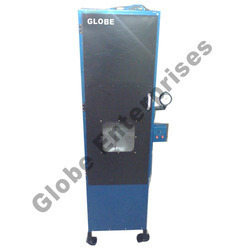
Tell us about your requirement

Price:
Quantity
Select Unit
- 50
- 100
- 200
- 250
- 500
- 1000+
Additional detail
Mobile number
Email

More Products in Fabric Testing Equipments Category
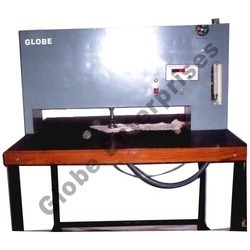
Air Porosity Tester
Price 85000 INR / Piece
Minimum Order Quantity : 1 Piece
Weight : Approx. 40 kg
Usage : Porosity Testing
Type : Other, Table Top
Power : Other, 220V, 50Hz
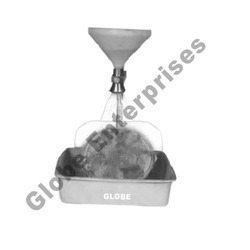
Spray Tester
Price 7000 INR
Minimum Order Quantity : 1 Unit
Weight : About 10 kg
Usage : Water Repellency Test
Type : Other, Spray Tester
Power : Other, Manual

Commercial Flammability Tester
Price 55000 INR / Unit
Minimum Order Quantity : 1 Unit
Weight : 50 kg
Usage : Laboratory Flame Resistance Testing
Type : Other, Horizontal and Vertical Flammability Tester
Power : Other, 220V/50Hz, 150W
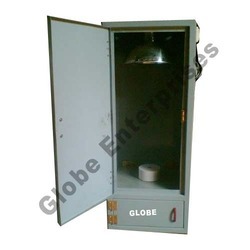
Drape Meter
Price 80000 INR / Unit
Minimum Order Quantity : 1 Unit
Weight : 4.5 kg
Usage : Measuring drape coefficient of fabrics
Type : Other, Drape Meter

We are mainly looking inquiries from Ghaziabad, Bahadurgarh, Kanpur, Agra and Chennai.
 Send Inquiry
Our Products
- Fabric Testing Equipments
- Foam Testing Equipments
- Footwear Testing Equipments
- Leather Testing Equipments
- Plastic Testing Equipments
- Rubber Testing Equipments
- Helmet Testing Equipement
- Yarn Testing Equipement
- Paper & Paperboard Testing Equipments
- Bursting Strength Tester
- Quadrant Scale
- Industrial Flammability Tester

373/7, Mukund Nagar, Industrial Area, Ghaziabad - 201001, Uttar Pradesh, India

Mr. Ishamuddin
(Proprietor)
Mobile :08045478105
 Send Inquiry
 Send SMS
Developed and Managed by Infocom Network Private Limited.
